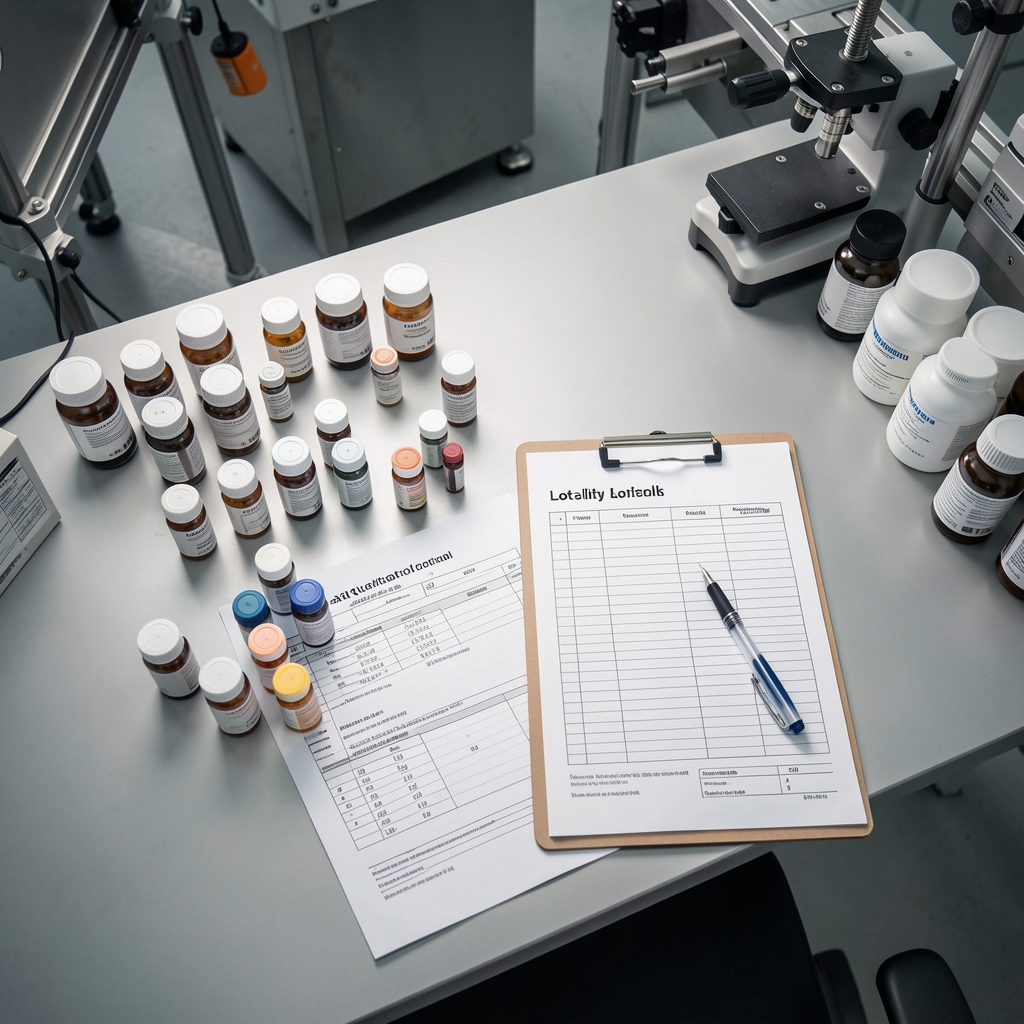
Sourcing. Verification. Composition. Record.
The Crovani process is structured around four sequential stages, each producing a documented record that is retained as part of the ongoing lot archive. No stage is skipped. No batch ships without a completed record set.
Each stage generates a record. Each record enters the archive.
Origin mapping and supplier evaluation.
Before any ingredient is approved for formulation, its supplier undergoes a qualification process. This involves reviewing facility documentation, verifying that food-grade processing standards are maintained at the source facility, and establishing that a chain-of-custody record can be produced on request.
Suppliers are placed on an approved-supplier list only when this review is complete. The list is maintained as a living document — suppliers are re-evaluated at defined intervals, and any gap in documentation triggers a hold on that ingredient until the record is restored.
Active ingredients are sourced from documented suppliers, with each batch accompanied by a certificate of composition. Sourcing prioritises suppliers whose facilities maintain food-grade processing standards.

Every incoming material is assessed before it enters stock.
When an ingredient shipment arrives at the Jakarta facility, it is held in quarantine pending assessment. The incoming lot number is logged, and the supplier's certificate of composition is cross-checked against labelled ingredient concentration values.
A sample from each incoming batch is retained as an archive specimen. This specimen is stored under controlled conditions and provides the reference material for any retrospective elemental analysis if a discrepancy is identified later in the chain.
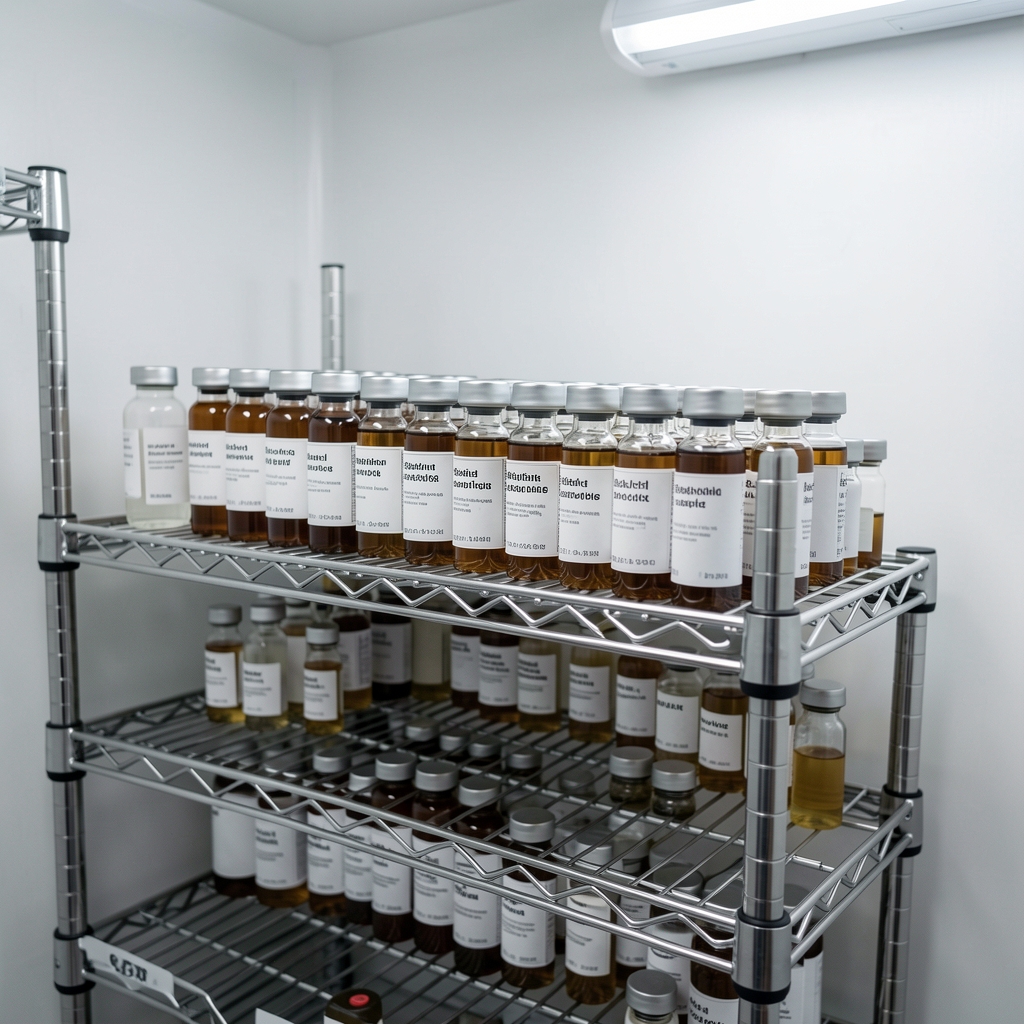
Fixed ratios, documented production run records.
Ingredient ratios in the Crovani daily complex are fixed between scheduled revision cycles. During a production run, each ingredient is weighed against the formulation specification and the result is logged. Deviations beyond defined tolerance thresholds halt the run pending review.
Capsule shell composition — granulation texture, shell material, and sealing conditions — is maintained to consistent parameters across runs. Each production run generates a completed batch record that includes ingredient lot references, operator sign-off, and environmental conditions at time of production.
The formulation is reviewed on a defined schedule against updated nutritional research. Revisions are implemented with a new revision number and a documented rationale, archived alongside the prior revision for comparison.
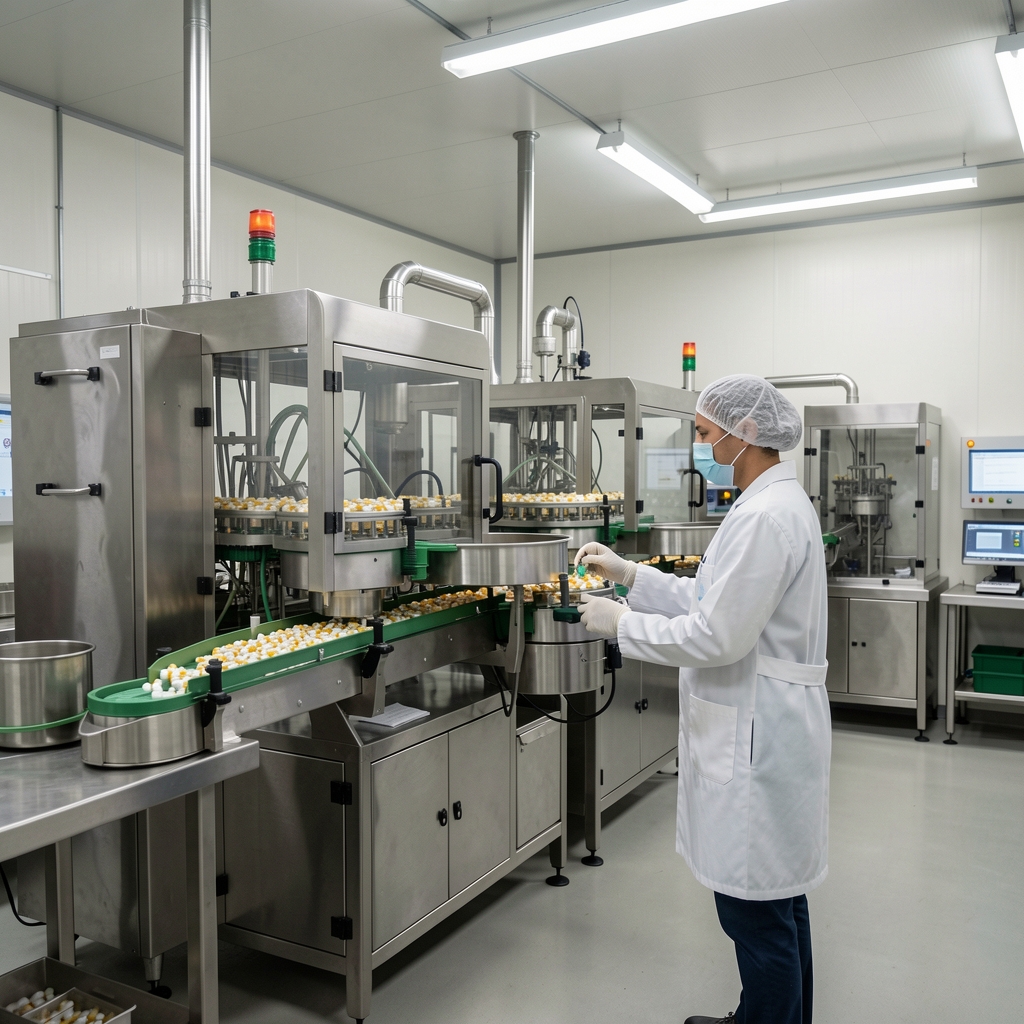
Finished product samples go to an external facility before release.
Finished product samples drawn from each production run are submitted to an independent third-party laboratory for elemental concentration analysis. The laboratory is external to the Crovani production chain — its confirmation is a condition of batch release, not a parallel process.
Ingredient profiles in Crovani supplements are selected based on published nutritional research and undergo independent batch verification for quality and labelling accuracy. The resulting verification report is filed against the batch record under a unique verification document number.
The complete record set for each batch — supplier documentation, incoming assessment log, production batch record, and third-party verification report — is archived and available to the Crovani internal audit process at any point.

A record system designed for retrospective review.
Every document in the Crovani system carries a unique identifier that links it to a specific batch, ingredient lot, or revision event. This structure allows any element of the archive to be located and cross-referenced without reconstructing a chain of custody from memory.
The system is maintained regardless of production volume. A small batch receives the same documentation coverage as a full-scale run. The principle is that documentation integrity should not scale with output.
Supplier Qualification Record
Covers facility confirmation, food-grade processing status, and chain-of-custody capability. Retained indefinitely on the approved-supplier list.
Incoming Lot Certificate
The supplier-provided certificate of composition, cross-checked on arrival against formulation specification values. Filed under the incoming lot number.
Production Batch Record
Ingredient lot references, weigh-in data, tolerance check results, capsule-shell condition, environmental parameters, and operator sign-off. One record per run.
Third-Party Verification Report
Independent elemental concentration analysis on finished-product samples. Filed under a unique verification document number linked to the batch code.
A selective approved-supplier list, reviewed on a defined schedule.
| Ingredient Category | Supplier Region | Processing Standard | Review Cycle |
|---|---|---|---|
| Zinc citrate | East Asia — Approved Region A | Food-grade | Annual |
| Magnesium bisglycinate | Southeast Asia — Approved Region B | Food-grade | Annual |
| Vitamin D3 (cholecalciferol) | Europe — Approved Region C | Supplement-grade | Bi-annual |
| Vitamin B12 (methylcobalamin) | East Asia — Approved Region A | Supplement-grade | Annual |
| Selenium (selenomethionine) | Europe — Approved Region C | Supplement-grade | Annual |
| Vitamin C (ascorbic acid) | Southeast Asia — Approved Region B | Food-grade | Annual |
Specific supplier names are withheld from public disclosure to maintain commercial confidentiality. Documentation is available on request for internal audit review.
Research-informed revision at defined intervals — not at market request.
Published nutritional research review.
At each review interval, relevant published nutritional research is assessed for changes in understanding around the active ingredients in the daily complex. Only peer-reviewed sources are considered.
Inclusion rates evaluated against current data.
Current ingredient inclusion rates are compared against research findings. If the evidence supports an adjustment, a revision proposal is drafted with a documented rationale referencing the specific research.
New revision number, documented rationale.
Any revision is assigned a new revision number. The complete revision event — prior specification, updated specification, rationale reference, and implementation date — is filed in the formulation archive.
Commonly asked questions about the Crovani process.
The questions below reflect recurring enquiries received from customers and wholesale enquirers regarding the production and verification methodology.
Every production batch is submitted for independent third-party verification before release. Verification is not a periodic or random-sample process — it applies to every run without exception. The resulting report is filed against the batch code as DOC-04 in the lot archive.
The batch code printed on each product unit corresponds to a specific production run with a complete documentation set. Enquiries regarding a specific batch can be directed to the team via the contact page. The available documentation covers the scope of the four-stage process described here.
The third-party laboratory is external to the Crovani production chain and has no commercial relationship with Crovani beyond the verification service. Selection was based on the laboratory's capability for elemental concentration analysis and its standing as an independent facility. The same laboratory has been used since the first production run, ensuring consistency of method across the archive.
Revisions are triggered by the scheduled literature review, not by customer feedback or market trends. If published nutritional research supports an adjustment to an inclusion rate, a revision proposal is drafted and reviewed before implementation. Each revision is assigned a revision number and a documented rationale. Product is never reformulated in response to promotional considerations.
Sourcing is disclosed at region level — specific supplier names are withheld for commercial confidentiality. The supplier overview table on this page reflects the approved-supplier list by ingredient category and region designation. For internal audit enquiries, more detailed supplier documentation is available on request.
Crovani products are nutritional food-supplements registered with the applicable local regulatory authority under food-supplement classification. Products meet compositional and labelling requirements for nutritional supplement categories.
We recommend speaking with a qualified wellness or nutrition professional before introducing any supplement to your daily routine, particularly if you have specific dietary requirements.